
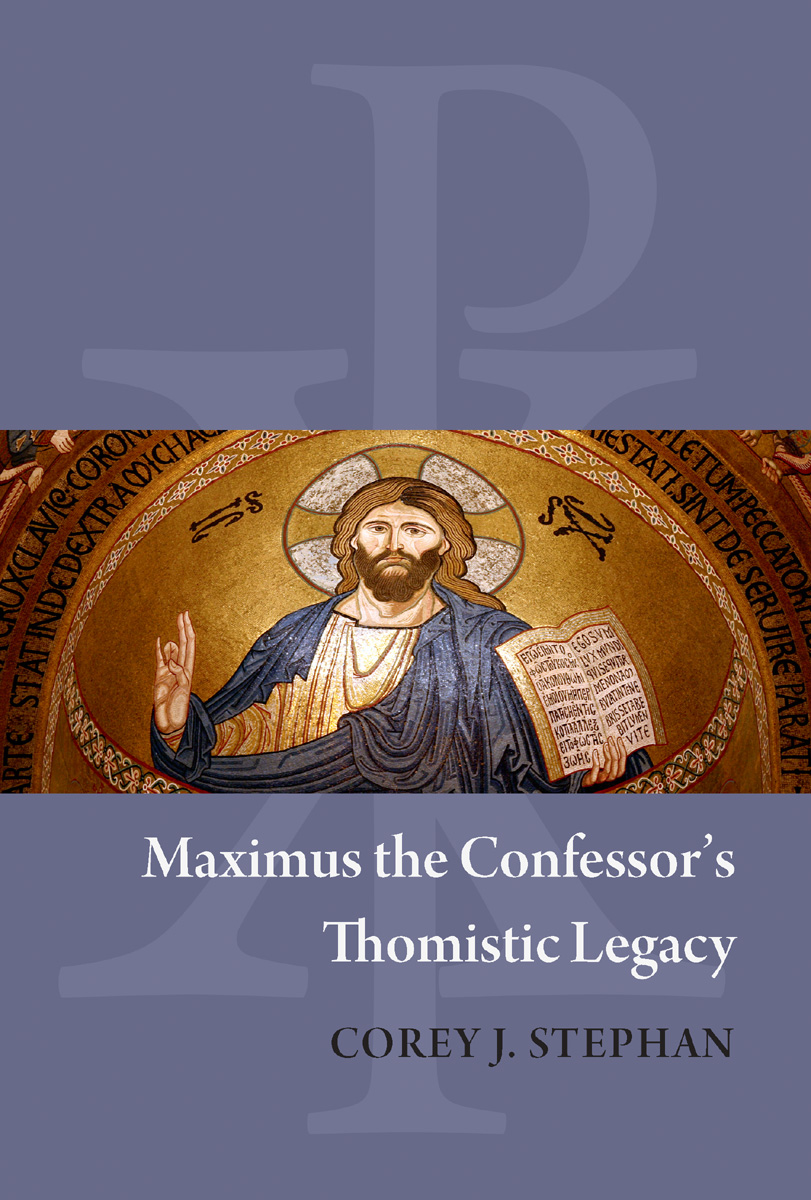
Maximus the Confessor’s Thomistic Legacy
Studies and Texts 244; Mediaeval Law and Theology 10 • xiv, 150 pp. • ISBN 978-0-88844-244-4 • Cloth • $95.00
Customers in the US please order through UTP by email (utpbooks@utpress.utoronto.ca) or phone (1-800-565-9523), or through Amazon • Customers in Canada please order through UTP by email, phone, or web • Customers outside North America please order through Brepols Publishers
Straddling Greek Byzantium and the Latin Middle Ages, this study in historical theology locates Maximus the Confessor’s Christology in the hybrid Greek and Latin milieu in which it originally flourished. Tracing the paths taken by Maximus’s writings, it shows how Thomas Aquinas sought to rehabilitate their contributions to the Church’s conciliar heritage for the entire subsequent Latin tradition.
Across its six central chapters, the book explores how Maximus’s Christology was transmitted by John Damascene, Nicetas of Heraclea, and other key figures through the centuries, before analyzing how Thomas’s readings of Maximian thought interrelate with those of his thirteenth-century Scholastic peers, especially Bonaventure and Albert the Great. Thomas’s turn toward the Greek East for theological inspiration remained unique in the period and ensured his understanding of the Greek Fathers, thereby guiding the dramatic evolution of his Christology throughout his career.
Maximus the Confessor’s Thomistic Legacy is also a work of bridging worlds: it not only presents a richer history of Latin High Scholasticism, but also contributes significantly to the ressourcement of Catholic theology by surveying the place of Thomas’s Maximianism in the thought of Hans Urs von Balthasar and Joseph Cardinal Ratzinger (Pope Benedict XVI), among the foremost modern readers of Maximus. Inspired by Thomas’s example, both von Balthasar and Ratzinger model a Thomistic Maximianism that can sustain the cause for Catholic and Orthodox re-communion.
Author
Corey J. Stephan holds a BA summa cum laude in Classical Languages and Theology from the University of St. Thomas in Minnesota, an MTS from the Boston College Clough School of Theology and Ministry, and a PhD in Religious Studies with the major area of historical theology from Marquette University. His broad fields of study are patristics and the theology of the Latin medieval and Greek Byzantine periods, and his research areas are late Greek patristic Christology and cosmology, as well as their Latin Scholastic reception.
Endorsement
“Corey Stephan traces how the Latin Scholastics received Maximus the Confessor’s Christology, as validated by the Sixth Ecumenical Council and passed down to both the Greek East and the Latin West by John Damascene. His story culminates with Thomas Aquinas’s nuanced attempt to find a philosophy of the human will by grappling with Maximus’s two-will Christology. While much of Stephan’s argument is immersed in the details of the relationship between Scholastic texts and those of Maximus and the Damascene, Stephan goes well beyond the important, but limited, philological demonstration of high Scholastic Christology’s textual pedigree. His work shows how Thomas’s reading of Maximus can be a model of genuine theological communion between the Greek and Latin traditions.” — Joshua Lollar, The University of Kansas